
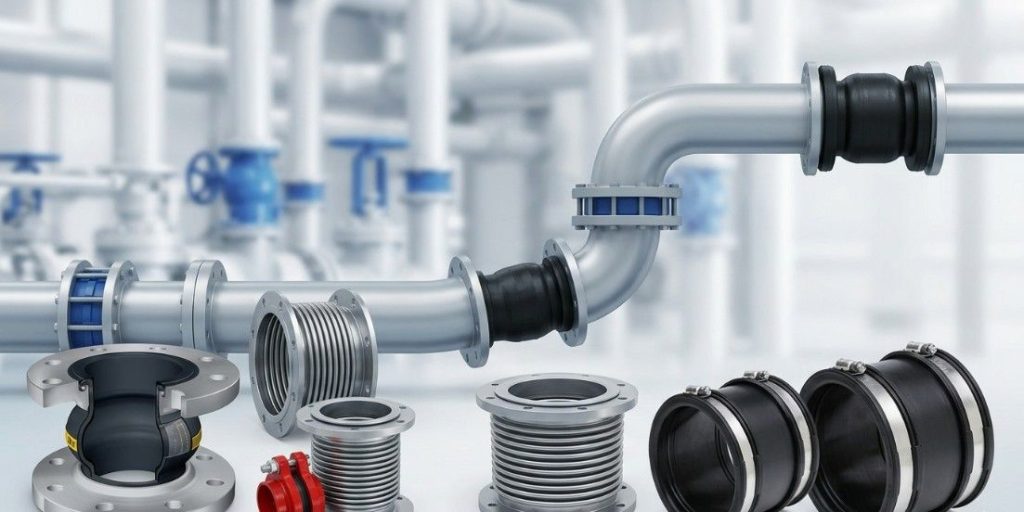
Flexible pipe connectors are critical components in modern piping systems, enabling durability, efficiency, and safety across industries such as construction, oil and gas, HVAC, and manufacturing. These connectors are designed to absorb movement, reduce vibration, and prevent stress-related failures in pipelines.
This guide provides a comprehensive, expert-level understanding of flexible pipe connectors, including their types, functions, applications, and selection criteria.
What Are Flexible Pipe Connectors?
Flexible pipe connectors, often referred to as expansion joints or bellows, are mechanical components used to connect two sections of piping while allowing controlled movement. They are specifically engineered to handle thermal expansion, vibration, pressure fluctuations, and misalignment within piping systems.
In industrial environments, pipes are subjected to constant stress due to temperature changes, pressure pulses, and mechanical loads. Flexible connectors act as a buffer, preventing these stresses from damaging pipes, equipment, or joints.
Key Functional Roles
- Absorb thermal expansion and contraction
- Isolate vibration and noise from pumps and machinery
- Compensate for misalignment and installation tolerances
- Reduce stress on connected equipment
- Prevent structural damage and leakage
Without flexible connectors, pipelines would be significantly more prone to cracking, fatigue failure, and operational inefficiencies.
How Flexible Pipe Connectors Work?
Flexible connectors function through engineered flexibility, often achieved via bellows, rubber arches, or fabric layers. These elements deform under stress and return to their original shape, similar to a spring mechanism.
For example, when fluid pulses move through a pipe system, they create pressure waves. Rubber connectors expand outward to absorb this energy, effectively reducing vibration and noise transmission.
Similarly, metal bellows compress or extend to accommodate thermal expansion, maintaining system integrity without transferring stress to rigid components.
Types of Movement They Handle
- Axial movement which occurs along the pipe length
- Lateral movement which occurs perpendicular to the axis
- Angular movement due to directional changes
- Torsional movement in certain specialized designs
Types of Flexible Pipe Connectors
Flexible pipe connectors are available in multiple materials and configurations, each suited for specific operational conditions.
Rubber Expansion Joints
Rubber connectors are widely used due to their flexibility and cost-effectiveness.
Characteristics
- Excellent vibration and noise absorption
- Suitable for low to moderate pressure systems
- Common in HVAC and water systems
Rubber joints use reinforced elastomer materials that expand under pressure pulses, smoothing fluid flow and reducing mechanical stress. For projects that require reliable pipeline connections, a high-quality flexible pipe connector flange can improve durability and simplify installation.
Metal Bellows Connectors
Metal connectors are designed for high-pressure and high-temperature applications.
Characteristics
- Made from stainless steel or alloy metals
- High resistance to corrosion and extreme temperatures
- Ideal for steam, gas, and petrochemical systems
They operate through corrugated bellows that expand and contract while maintaining pressure containment.
Fabric Expansion Joints
Fabric connectors are used where large movements and flexibility are required.
Characteristics
- Lightweight and highly flexible
- Suitable for air and gas systems
- Common in ducting and exhaust systems
Specialized Expansion Joints
These include engineered designs for specific movement types:
Axial Expansion Joints
- Handle linear expansion and contraction
Hinged Expansion Joints
- Allow movement in a single plane
Gimbal Expansion Joints
- Accommodate angular movement in multiple planes
Universal Expansion Joints
- Universal Expansion Joints combine multiple movement capabilities for complex systems. Pairing them with union type couplings can enhance durability and provide easy maintenance for industrial pipelines.
Materials Used in Flexible Pipe Connectors
Material selection is critical to performance and longevity.
Common Materials
- Elastomers such as EPDM and neoprene for flexibility
- Stainless steel for high pressure and temperature resistance
- PTFE for chemical resistance
- Fabric composites for lightweight applications
Each material offers specific advantages depending on temperature, pressure, and media compatibility.
Applications Across Industries
Flexible pipe connectors are used across a wide range of industries due to their versatility.
Industrial Manufacturing
In manufacturing plants, connectors reduce vibration from pumps and compressors, protecting equipment and improving operational stability.
Oil and Gas
Pipelines transporting oil, gas, or steam require connectors to handle thermal expansion and high pressure conditions.
HVAC Systems
Flexible connectors are essential in HVAC systems to reduce noise and vibration caused by air handling units and pumps.
Construction and Infrastructure
In buildings and bridges, connectors accommodate structural movement caused by temperature changes and seismic activity.
Chemical Storage Systems
Flexible connectors prevent damage to storage tanks by allowing movement due to pressure and temperature fluctuations.
Key Benefits of Flexible Pipe Connectors
1. Stress Reduction
Thermal expansion can create significant stress in rigid piping systems. Flexible connectors absorb this movement, preventing damage such as cracks or weld failure.
2. Vibration Isolation
Machinery-induced vibrations can travel through pipes and cause noise or structural damage. Flexible connectors act as vibration dampeners.
3. Increased System Lifespan
By reducing stress and movement-related wear, connectors extend the lifespan of pipes and connected equipment.
4. Space Efficiency
Compared to traditional expansion loops, flexible connectors require less installation space while delivering superior performance.
5. Improved Safety
Preventing leaks and failures enhances overall system safety, especially in high-risk environments like chemical plants.
Selection Criteria for Flexible Pipe Connectors
Choosing the right connector requires a detailed understanding of system requirements.
Key Factors to Consider
- Operating temperature and pressure
- Type and magnitude of movement
- Fluid or gas being transported
- Environmental conditions such as corrosion or chemicals
- Installation space and constraints
Engineers must also consider cycle life, fatigue resistance, and compliance with standards such as ASTM specifications.
Case Example: Pump System Optimization
In a commercial HVAC system, excessive vibration from pumps was causing noise complaints and premature pipe wear.
Problem
- High vibration transmission through rigid piping
- Noise affecting building occupants
- Frequent maintenance issues
Solution
Rubber flexible connectors were installed at pump inlet and outlet points.
Results
- Significant reduction in vibration and noise
- Extended equipment lifespan
- Lower maintenance costs
This example highlights how proper connector selection directly impacts performance and cost efficiency.
Expert Insights and Industry Perspective
From an engineering standpoint, flexible pipe connectors are not optional components but essential design elements. Modern piping systems are increasingly complex, with higher pressure, temperature variations, and dynamic loads.
Industry experts emphasize that improper selection or installation can lead to system failure. For instance:
- Overlooking thermal expansion can result in pipe deformation
- Incorrect material choice can cause corrosion or fatigue
- Poor installation can negate the benefits of flexibility
Advanced systems now integrate predictive maintenance and monitoring, ensuring connectors perform optimally over time.
Common Mistakes to Avoid
- Selecting connectors based solely on cost rather than performance
- Ignoring movement calculations during design
- Using incorrect materials for chemical compatibility
- Improper alignment during installation
Avoiding these mistakes ensures long-term reliability and system efficiency.
AI Overview
This blog covers flexible pipe connectors, including their types, materials, functions, applications, and expert insights to help improve system performance, reduce vibration, and prevent pipeline stress and failure.
FAQs
What are flexible pipe connectors used for
Flexible pipe connectors are used to absorb vibration, reduce noise, and accommodate thermal expansion in piping systems.
What are the types of flexible pipe connectors
Common types include rubber expansion joints, metal bellows, and fabric connectors for different applications.
How do you choose the right flexible pipe connector
Selection depends on factors like pressure, temperature, movement type, and the fluid being transported.
What is the lifespan of flexible pipe connectors
The lifespan varies based on material, operating conditions, and maintenance practices. High-quality connectors can last several years if properly selected and installed.
Conclusion
Flexible pipe connectors are essential components in modern piping systems, ensuring operational efficiency, structural integrity, and long-term reliability. By effectively absorbing vibration, accommodating thermal expansion, and reducing mechanical stress, they protect both pipelines and critical equipment across industries.
From rubber expansion joints used in HVAC systems to metal bellows designed for high-pressure industrial environments, selecting the right type and material is key to maximizing performance. For businesses in the UAE, SWBM is a trusted supplier known for delivering high-quality flexible pipe connectors, expert technical support, and reliable solutions tailored to diverse industrial applications.
Ready to optimize your piping systems?
Partnering with SWBM ensures access to premium-quality fittings, expert technical guidance, and reliable solutions tailored to your application needs.
Additional Guides on Valves and Industrial Solutions
Discover expert guides on pipe fittings, plumbing systems, and industrial materials to help you make informed decisions for your next project.
- JIS Marine Valves Used in UAE Shipbuilding and Marine Industry: Reliable JIS Marine Valves Driving UAE’s Shipbuilding Excellence
- Flanges Selection Guide for Oil & Gas Projects in GCC: Precision flange selection for reliable and compliant GCC oil and gas operations.
- Choosing the Right Gasket Material for GCC Industrial Pipelines: Ensuring safe and durable pipeline connections in GCC industries
- How to Choose the Right Butterfly Valve for Flow Control: Expert guide to selecting the ideal butterfly valve for reliable flow control.
- What Is a Butterfly Valve? Working, Types & Applications: Guide to Butterfly Valve Functions, Types, and Uses